LANGUAGE, IDENTITY, AND EVERYDAY INTERACTION: A MICRO-SOCIOLINGUISTIC STUDY OF CODE-SWITCHING PRACTICES AMONG URBAN YOUTH
Authors
Sofia Martinezs ()Files
Key Information
Journal
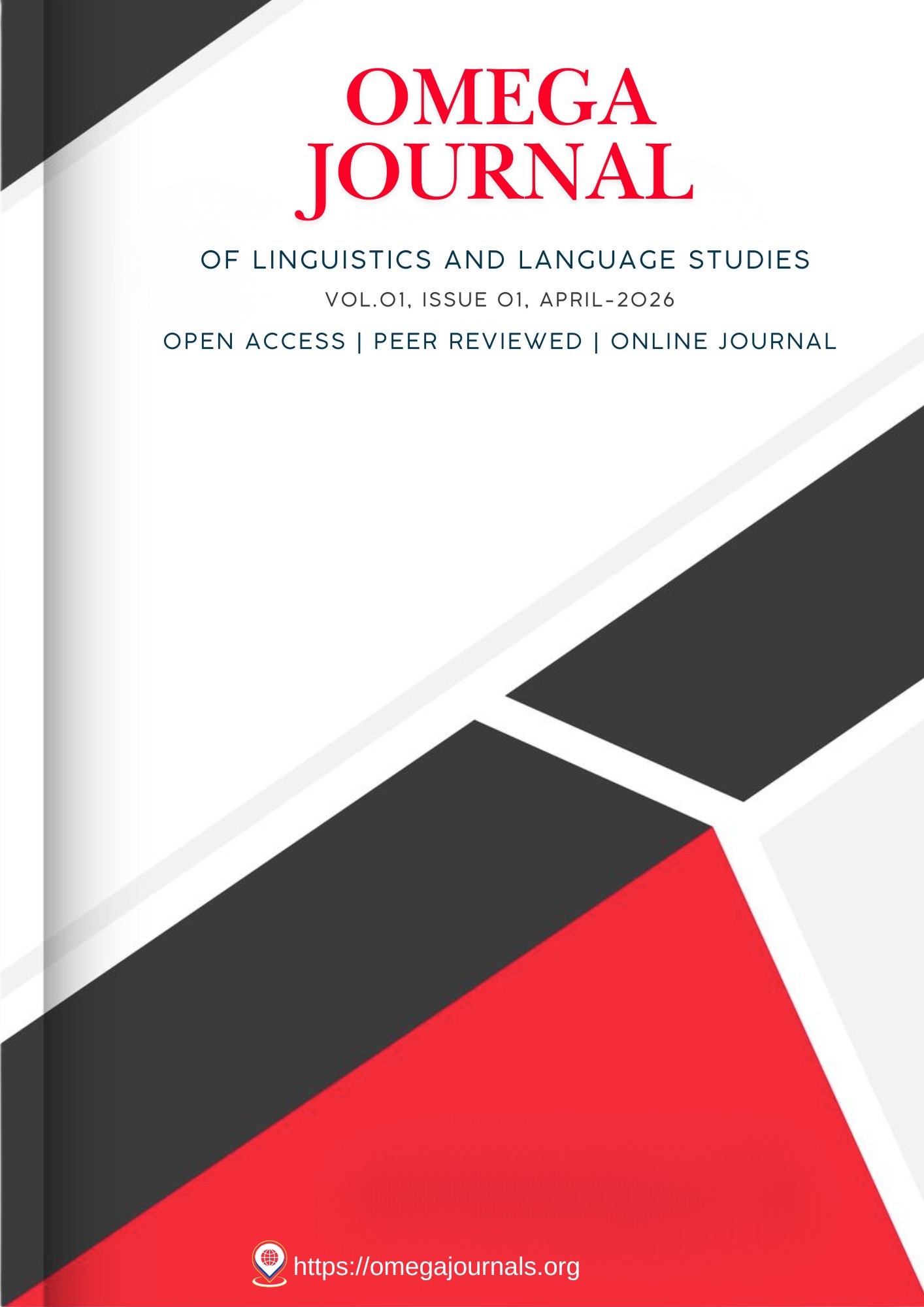
Published in Vol. 1 No. 1 (2026) of Omega Journal of Linguistics and Language Studies.
OMEGA Journal of Linguistics and Language Studies is an international, peer-reviewed, open access journal dedicated to advancing research in linguistics, language, and communication. The journal provides a platform for scholars, educators, and researchers to publish high-quality work in both theoretical and applied aspects of language studies across diverse linguistic and cultural contexts.
Key Highlights:
- Peer-reviewed (Double-blind)
- Open Access Journal
- Monthly Publication
- International Scope
Frequency of Publication: Monthly
Languages: English, Polish and Russian
Publication Format: Electronic
ISSN (E): 3072-4678
About the JournalAbstract
This paper examines the relationship between language and identity through a micro-sociolinguistic analysis of code-switching practices among urban multilingual youth. Moving beyond macro-level explanations of bilingual behavior, the study focuses on how speakers use linguistic resources to construct and negotiate identity in real-time interaction. Drawing on ethnographic observations and conversational data, the analysis reveals that code-switching is not merely a reflection of linguistic competence but a strategic and context-sensitive practice. The paper introduces the Micro-Identity Positioning Framework (MIPF), which conceptualizes code-switching as a dynamic process through which speakers align, distance, or redefine social identities. The findings contribute to sociolinguistic theory by emphasizing the fluid and interactional nature of identity construction in multilingual contexts.
References
Details
License
Copyright (c) 2026 Omega Journal of Linguistics and Language Studies

This work is licensed under a Creative Commons Attribution 4.0 International License.
You are free to:- Share — copy and redistribute the material in any medium or format for any purpose, even commercially.
- Adapt — remix, transform, and build upon the material for any purpose, even commercially.
- The licensor cannot revoke these freedoms as long as you follow the license terms.
- Attribution — You must give appropriate credit, provide a link to the license, and indicate if changes were made. You may do so in any reasonable manner, but not in any way that suggests the licensor endorses you or your use.
- No additional restrictions — You may not apply legal terms or technological measures that legally restrict others from doing anything the license permits.
You do not have to comply with the license for elements of the material in the public domain or where your use is permitted by an applicable exception or limitation.
No warranties are given. The license may not give you all of the permissions necessary for your intended use. For example, other rights such as publicity, privacy, or moral rights may limit how you use the material.