
SUSTAINABLE BUSINESS MODEL INNOVATION IN THE CIRCULAR ECONOMY: A MULTI-CASE ANALYSIS OF EUROPEAN FIRMS
Authors
Matteo Ricci ()Files
Key Information
Journal
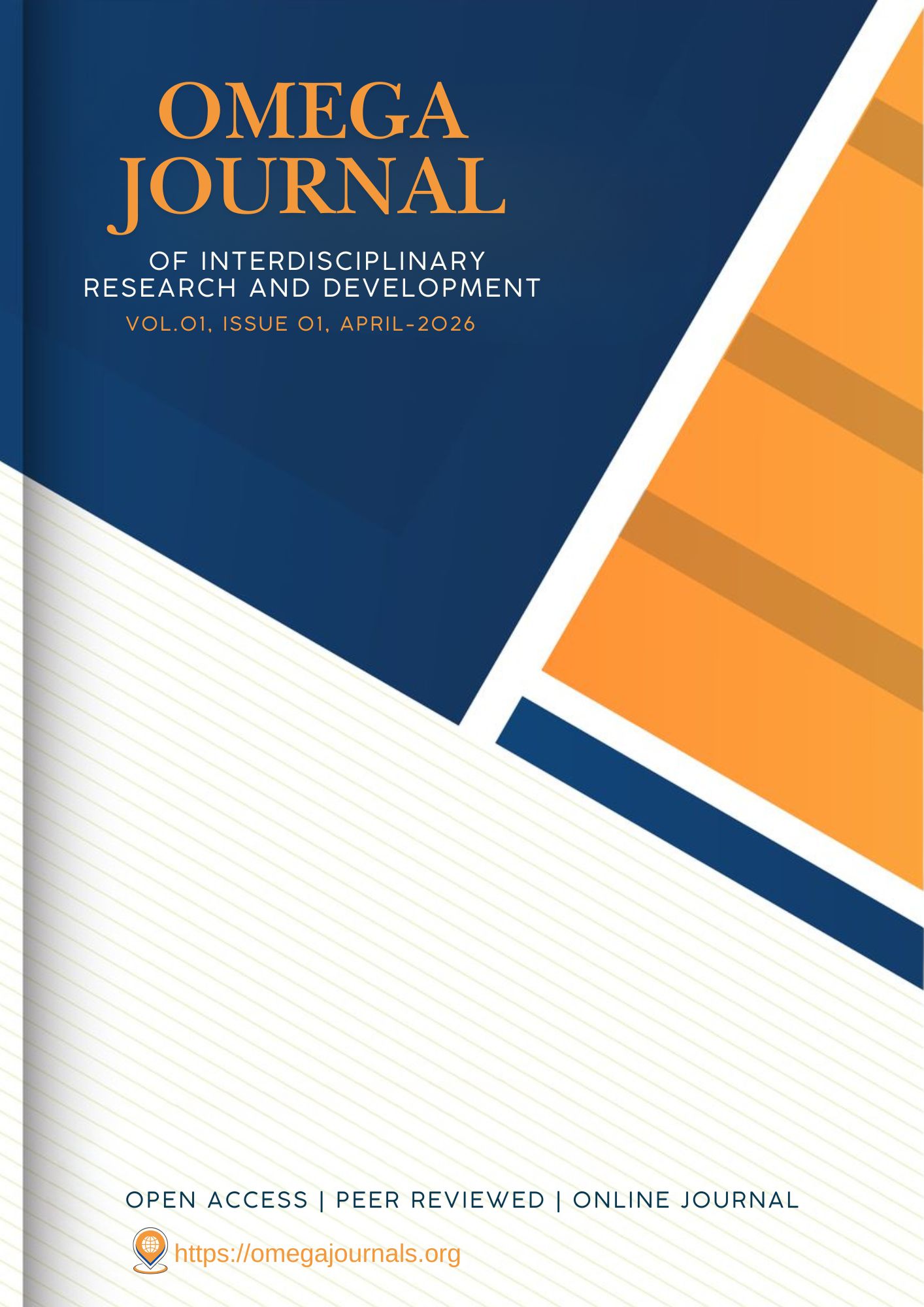
Published in Vol. 1 No. 1 (2026) of Omega Journal of Interdisciplinary Research and Development.
OMEGA Journal of Interdisciplinary Research and Development is an international, peer-reviewed, open access journal dedicated to promoting research that integrates knowledge across multiple disciplines. The journal provides a platform for scholars, researchers, and professionals to publish innovative and impactful research that contributes to academic advancement and societal development.
Key Highlights:
- Peer-reviewed (Double-blind)
- Open Access Journal
- Monthly Publication
- Multidisciplinary Scope
Frequency of Publication: Monthly
Languages: English, Polish and Russian
Publication Format: Electronic
ISSN (E): 3072-4708
About the JournalAbstract
The transition toward a circular economy has compelled firms to rethink traditional business models and adopt sustainable innovation strategies. This study investigates how European companies implement sustainable business model innovation (SBMI) within the circular economy framework. Using a qualitative multi-case analysis of firms across manufacturing and service sectors, the research identifies key drivers, strategies, and barriers associated with circular transformation. The findings reveal that successful firms integrate sustainability into core value creation processes rather than treating it as an auxiliary function. However, institutional constraints, cost structures, and market readiness remain significant challenges. The study contributes to interdisciplinary research by linking business innovation, environmental sustainability, and economic transformation.
References
1.Bocken, N. M. P., Short, S. W., Rana, P., & Evans, S. (2014). A literature and practice review to develop sustainable business model archetypes. Journal of Cleaner Production, 65, 42–56. https://doi.org/10.1016/j.jclepro.2013.11.039
2.Foss, N. J., & Saebi, T. (2017). Fifteen years of research on business model innovation. Journal of Management, 43(1), 200–227. https://doi.org/10.1177/0149206316675927
3.Geissdoerfer, M., Savaget, P., Bocken, N. M. P., & Hultink, E. J. (2017). The circular economy – A new sustainability paradigm? Journal of Cleaner Production, 143, 757–768. https://doi.org/10.1016/j.jclepro.2016.12.048
4.Kirchherr, J., Reike, D., & Hekkert, M. (2017). Conceptualizing the circular economy. Resources, Conservation and Recycling, 127, 221–232. https://doi.org/10.1016/j.resconrec.2017.09.005
Details
License
Copyright (c) 2026 Omega Journal of Interdisciplinary Research and Development

This work is licensed under a Creative Commons Attribution 4.0 International License.
You are free to:- Share — copy and redistribute the material in any medium or format for any purpose, even commercially.
- Adapt — remix, transform, and build upon the material for any purpose, even commercially.
- The licensor cannot revoke these freedoms as long as you follow the license terms.
- Attribution — You must give appropriate credit, provide a link to the license, and indicate if changes were made. You may do so in any reasonable manner, but not in any way that suggests the licensor endorses you or your use.
- No additional restrictions — You may not apply legal terms or technological measures that legally restrict others from doing anything the license permits.
You do not have to comply with the license for elements of the material in the public domain or where your use is permitted by an applicable exception or limitation.
No warranties are given. The license may not give you all of the permissions necessary for your intended use. For example, other rights such as publicity, privacy, or moral rights may limit how you use the material.